Recording Model Car Ownership Questions Before Your Next Purchase
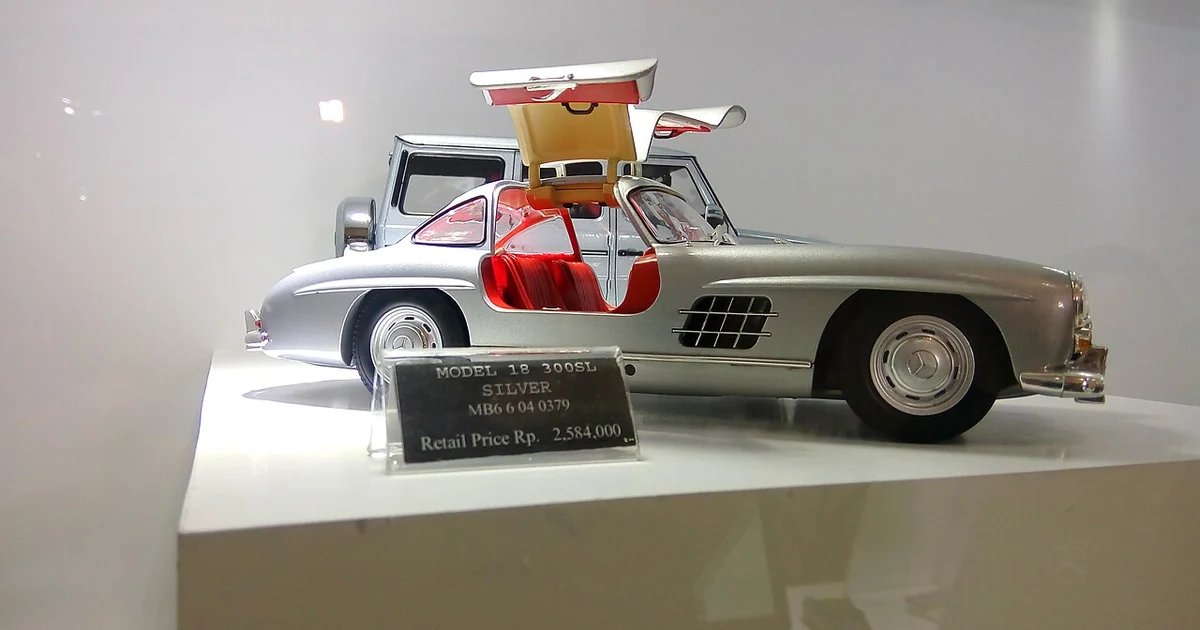
Most collectors keep some kind of record for their model cars, but few stop to ask what that record is actually for. A receipt in a drawer, a photo on a phone, and a line in a spreadsheet can all exist at once without answering the same questions. Before you add anything new to your shelves, it helps to write down the specific questions your documentation should be able to answer. This article takes a different angle from a general filing guide: it focuses on building a question list first, then checking which parts of your records already answer each question and which parts still need work.
Start With the Questions, Not the Folder
Many documentation systems fail because they were designed around storage instead of use. A collector creates folders, names them, and fills them with whatever comes in. Months later, when a question comes up, the folder structure turns out to be unhelpful. A better starting point is to write five to ten questions you would expect a future reader of your collection to ask. Examples include: What is this piece, and what version of it is it? Where did it come from, and when? What condition was it in when I received it? Has anything been repaired, repainted, or replaced? What does the verification record say, and what does it not say?
Writing these questions down first changes what you keep. If a question asks about condition on arrival, you will want a dated photo from the day the item arrived, not just the listing screenshot. If a question asks about source, you will want the seller's name or handle and the date of the transaction, stored in one place. The question list becomes a checklist for each new item.
Separate Verification Evidence From Ownership Evidence
A common mistake is treating every piece of paper as proof of the same thing. A receipt shows a transaction occurred. A photo shows the object looked a certain way on a certain day. A verification result from scanning a tag shows what that check returned at that time. These are three different kinds of evidence, and a good record keeps them distinct.
Mint Motors Club notes that its printed car tags can be checked by scanning a QR code, and that verification uses Ed25519 cryptographic verification. For your records, the useful habit is to note what you scanned, when you scanned it, and what the result displayed, in your own words. Save a dated photo of the screen if that is useful to you. Then record separately what the scan did and did not establish for you. A verification result tells you about the tag check it performed. It does not, by itself, tell you about the object's condition, its full history, or everything you might want to know about its provenance.
A Practical Record-Keeping Checklist
Use the following list for each new piece. Check off items as you complete them, and leave blank any line you cannot yet fill in, since a visible gap is more useful than a guessed entry.
Item one: a one-line identification noting the model name, scale, and any version or variant label printed on the piece or its packaging. Item two: the acquisition date, source name or handle, and the price paid, recorded only from your own transaction record. Item three: a dated photo set showing the piece on arrival, from the front, rear, and underside, plus any tag or label. Item four: the result of any tag check you performed, with the date and a short description of what the result showed. Item five: a condition note listing any chips, scuffs, loose parts, or discoloration you noticed, with the date you noted them. Item six: a repair or modification log, even if it says none. Item seven: a storage location and the date it was last moved.
Review this checklist once a season. The goal is not to make the record perfect but to make each question answerable by pointing to a specific entry.
Asking Better Questions When Records Conflict
Sometimes your records will disagree. A listing may describe a piece differently from what arrived, or a verification result may not match a seller's description. When this happens, resist the urge to resolve the conflict by choosing whichever source you prefer. Instead, write down both claims with their dates and sources, and note what additional information would settle the question.
Useful follow-up questions include: Which claim came from the seller, which from the object itself, and which from a check I performed? Is there a record I could obtain from the seller that clarifies the transaction? Does the disagreement affect a decision I still need to make, such as whether to insure, store, or sell the piece? You are not required to answer every question immediately. A recorded open question is better than a silently resolved one, because it reminds you to revisit the item when new information appears.
Over time, this habit produces a collection record that is honest about its own limits. That honesty is what makes the record useful when you need it most.