Reading a Scan Result: What a Tag Check Proves and Where Collectors Go Next
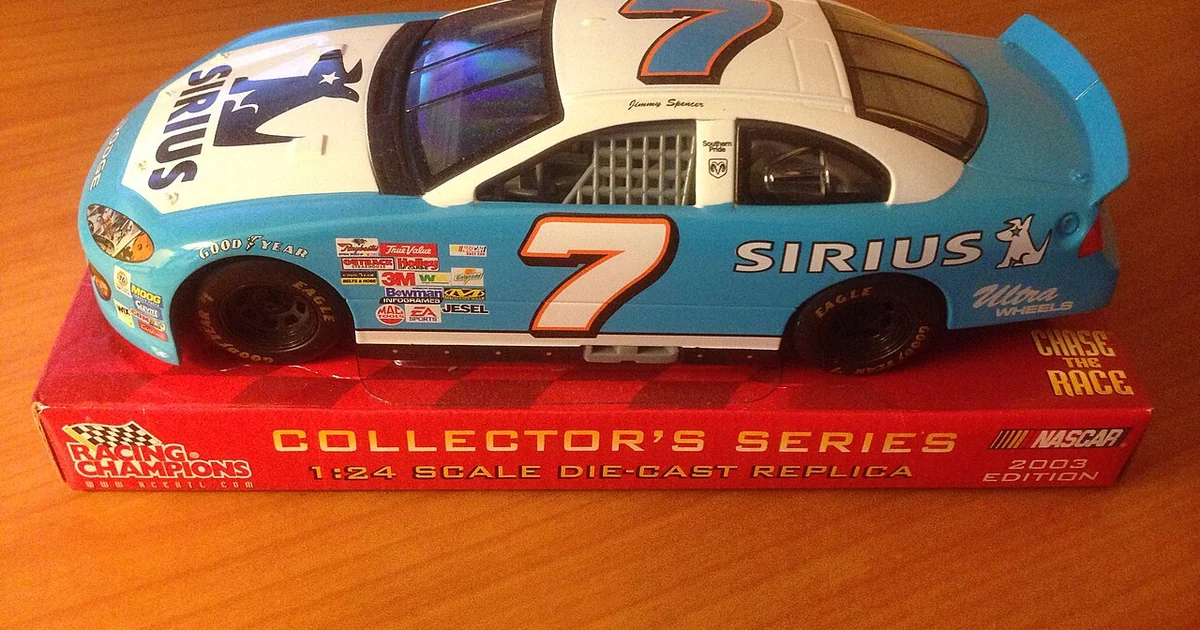
A QR tag on a 3D printed model car invites a quick, satisfying step: point a phone at the code, wait for a result, and feel reassured. That moment is useful, but it is only one piece of a collector's judgment. Understanding exactly what a scan can establish, and what it cannot, helps you keep your confidence proportionate to the evidence. This article walks through a method for treating a verification result as one data point among several, so your collection notes stay accurate and your decisions stay grounded.
What a verification result is designed to answer
The brand's published description says that scanning the QR code on a 3D printed car lets you verify its authenticity, and that the check relies on Ed25519 cryptographic verification. In plain terms, a cryptographic signature is a mark that can only be produced by someone holding the matching private key, and anyone can check it against the public key. When a scan reports a valid result, the narrow conclusion is that the tag data matches a signature the verifying system accepts. That is a meaningful statement about the tag and its data.
Before you rely on any result, write down the exact question the scan answers. A good question is: does this tag's data carry a valid signature under the verification system? A poor question is: is this physical object the same object that was originally made, handled, and sold? The first can be answered by a scan. The second depends on chain of custody, condition records, and your own observations. Separating these two questions prevents the common mistake of treating a clean scan as proof of everything about the car.
Four things a scan cannot settle on its own
A tag can be valid while sitting on the wrong car. Tags are physical objects, and physical objects get moved, swapped, or lost from their original context. Before accepting a result, check whether the tag appears undisturbed: the adhesive edges, the surface beneath it, and any protective film should look consistent with the rest of the model's finish. Note any lifting, re-adhesion, or visible residue in your record.
A result does not describe the car's condition. A verified tag tells you nothing about joint wear, paint micro-scratches, warping from heat, or dust in the wheel wells. Those facts belong in a separate condition log, which you update at each inspection.
A result does not establish the price, rarity, or future value of the piece. Collectors often blur authenticity with market position. Verification supports identity; it does not tell you what another person will pay, and this article does not offer any financial guidance on that point.
A result does not replace your own questions about provenance. Where the car came from, who handled it, and what documents accompany it are separate matters. A verified tag can sit alongside a gap in the paper trail, and you should record that gap rather than assume the scan closes it.
A field checklist for each scan
Use the same short routine every time so your records stay comparable across the collection. First, photograph the tag in place before scanning, including its edges. Second, scan the code and record the exact result text and the date. Third, note whether the result was clear, delayed, or unclear, since an unclear result deserves a retry or a note rather than a confident entry.
Fourth, compare the tag's placement and condition with your last inspection. Fifth, record which question the result answered and which questions remain open, such as provenance or condition changes. Sixth, store the photo and the note together under the model's identifier so you can retrieve the full picture later.
Finally, reread the entry before moving on. If the note says only verified, add what was verified. A clear sentence such as tag data verified on this date; placement unchanged; no provenance documents on file is more useful than a single word a future reader cannot interpret.
Building a record that survives a shelf rearrangement
Collections change. Pieces move between shelves, get rehoused, or are reorganized by theme. A verification note that lives only in a phone's camera roll will be hard to find in a year. Keep a single index where each model has one row, with columns for tag status, last scan date, condition notes, and open questions.
Revisit the open-question column on a fixed schedule. A question about provenance may be answered by a document that arrives later, and a condition note may need updating after a move. Treat the index as a living record: each entry should be easy to reread, and each change should be dated so you can trace how your understanding developed.
The goal is not to reach certainty about everything. It is to keep an honest account of what you know, how you know it, and what you have not yet checked. A verification scan is a strong entry in that account when it is recorded with its limits attached.
Questions to ask before trusting any collectible
Whatever the brand's tools provide, a collector benefits from a standing set of questions. What exactly does this check confirm? What would change my conclusion? Who else could have handled this object, and is there a record of it? Is the tag physically consistent with the rest of the piece? When did I last inspect the car directly?
Asking these questions consistently protects you from over-reading a single result. A scan that returns a valid signature is a reason to look more closely, record what you see, and keep your notes precise. It is not a reason to stop asking questions. Collectors who keep that habit tend to have cleaner records and fewer surprises when they revisit a piece years later.